
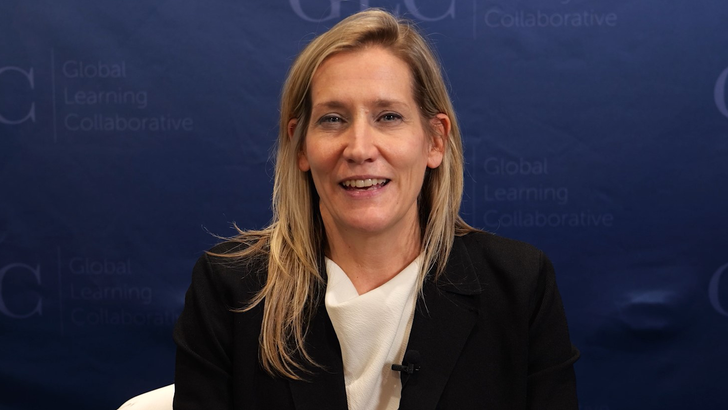
In this video brief from AHA 2025, Dr. Erin Bohula presents the primary results of the VESALIUS-CV trial, a phase 3 study of evolocumab in more than 12,000 patients at high cardiovascular risk but without prior myocardial infarction or stroke. She discusses the study design, primary and secondary outcomes, and implications for LDL-C lowering in primary cardiovascular prevention. Dr. Bohula also addresses the clinical significance of these findings in the context of current lipid management strategies and highlights factors that may guide patient selection in real-world settings.
Primary Results of the VESALIUS-CV Trial: Evolocumab in Patients at High Cardiovascular Risk Without Prior MI or Stroke

Transcript
Primary Results of the VESALIUS-CV Trial: Evolocumab in Patients at High Cardiovascular Risk Without Prior MI or Stroke
closeTranscript
Primary Results of the VESALIUS-CV Trial: Evolocumab in Patients at High Cardiovascular Risk Without Prior MI or Stroke
closeDr. Bohula:
Hi there. From AHA 2025 in New Orleans. My name is Erin Bohula, and I am the co–principal investigator of the VESALIUS-CV study, and I was hoping to give you a little bit of a high-level overview of what we found and what we presented here at AHA.
The VESALIUS-CV study was really a landmark study evaluating the use of a PCSK9 inhibitor, evolocumab, in the setting of patients who are at high cardiovascular risk but who have not had a prior MI or stroke. The prior trials of PCSK9 inhibitors have focused on that highest-risk population who have in fact had a history of MI or stroke, so this is the first study in a lower-risk population.
And to provide a few more details about who these patients are, we enrolled about 12,000 patients, and they were enrolled on the basis of at least one of the following criteria: they had to have coronary artery disease without a prior MI, peripheral artery disease, cerebrovascular disease without a stroke, or high-risk diabetes. And additionally, they had to have elevated cholesterol, and one of the criteria there was an LDL cholesterol of at least 90 mg/dL.
These patients were well treated with background lipid-lowering therapy. About 72% of them were on a high-intensity regimen, and 68% were on a high-intensity statin. And the median LDL nonetheless was 122 mg/dL.
And what we ultimately found in this patient population is that treatment with evolocumab significantly reduced the LDL down by about 55% to a median of 45 mg/dL. And very importantly, in this setting, we saw significant reductions in cardiovascular events. More specifically, we observed a 25% reduction in one of our co–primary endpoints, which was a composite of coronary heart disease death, MI, or ischemic stroke, and a 19% reduction in another composite, which were those same elements plus ischemia-driven revascularization.
In addition, we saw a 36% reduction in the first MI in these patients, or MI in general, but because they had not had a prior event we can say we prevented that first MI. And also there were nominal findings on all-cause mortality, a hazard ratio of 0.80 with a P value that was 0.0005. So very important findings.
We were really excited to see this. And I think what this means is it really reinforces the fact that we should be identifying these patients who are still at risk, lower risk than those studied before, and we should be pushing their LDL down to very low levels. So for example, on average, maybe around 40 or 45 mg/dL, as was done in this study.
So again, thank you for your attention. My name is Erin Bohula, and I appreciate you watching today.
Ready to Claim Your Credits?
You have attempts to pass this post-test. Take your time and review carefully before submitting.
Good luck!
Overview
Provider(s)/Educational Partner(s)

Today’s healthcare environment is constantly evolving and advances of medical science occur at an accelerating pace. CME/CE plays an important role in the clinical environment and is an essential element of physician training, learning, and improvement, thereby importantly contributing to optimal patient care. Since 2000, MEDCON’s mission is to deliver high quality within the world of medical education by creating forums like PACE-CME, organizing live meetings, and providing online education. We aim to stimulate the review, exchange, and assimilation of key scientific findings to improve patients’ health, to raise awareness of new science underlying various disease states, and to accelerate the translation of this information into clinical practice.Commercial Support
This activity is supported by an independent educational grant from Amgen, Inc.
videoEvolocumab in Patients at High Cardiovascular Risk Without Prior MI or Stroke: Primary Results of the VESALIUS-CV Trial
Show more
videoGlobal Burden of Stroke and Myocardial Infarction in Patients at High Risk of First MACE: Insights From the VESALIUS-REAL Study
Show more
videoReal-World Impact of Evolocumab on MACE Reduction in ASCVD
Show more
Overview
In this video brief from AHA 2025, Dr. Erin Bohula presents the primary results of the VESALIUS-CV trial, a phase 3 study of evolocumab in more than 12,000 patients at high cardiovascular risk but without prior myocardial infarction or stroke. She discusses the study design, primary and secondary outcomes, and implications for LDL-C lowering in primary cardiovascular prevention. Dr. Bohula also addresses the clinical significance of these findings in the context of current lipid management strategies and highlights factors that may guide patient selection in real-world settings.
Provider(s)/Educational Partner(s)

Today’s healthcare environment is constantly evolving and advances of medical science occur at an accelerating pace. CME/CE plays an important role in the clinical environment and is an essential element of physician training, learning, and improvement, thereby importantly contributing to optimal patient care. Since 2000, MEDCON’s mission is to deliver high quality within the world of medical education by creating forums like PACE-CME, organizing live meetings, and providing online education. We aim to stimulate the review, exchange, and assimilation of key scientific findings to improve patients’ health, to raise awareness of new science underlying various disease states, and to accelerate the translation of this information into clinical practice.Commercial Support
This activity is supported by an independent educational grant from Amgen, Inc.
videoEvolocumab in Patients at High Cardiovascular Risk Without Prior MI or Stroke: Primary Results of the VESALIUS-CV Trial
Show more
videoGlobal Burden of Stroke and Myocardial Infarction in Patients at High Risk of First MACE: Insights From the VESALIUS-REAL Study
Show more
videoReal-World Impact of Evolocumab on MACE Reduction in ASCVD
Show more
Title
Share on ReachMD
CloseProgram Chapters
Segment Chapters
Playlist:
Recommended
We’re glad to see you’re enjoying ReachMD…
but how about a more personalized experience?



